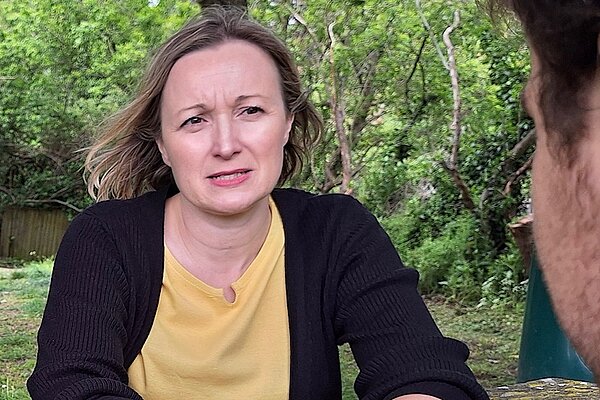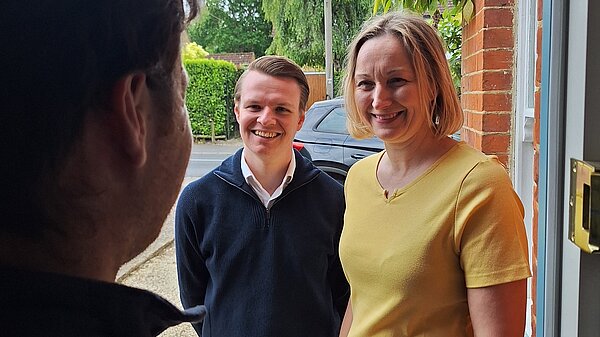
Jo Hawley announced as the Liberal Democrats Parliamentary Candidate for Bracknell
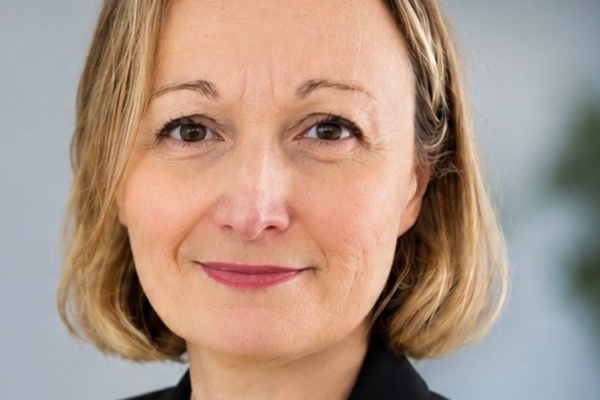
Jo Hawley, who served as the UK’s Deputy Trade Commissioner for Europe and as Consul-General in China, has been selected as the Liberal Democrat parliamentary candidate for Bracknell.
Meet Jo Hawley
Ms Hawley, a Bracknell resident and Warfield parish councillor, spent more than a decade persuading international companies to invest in the UK during a twenty-five year career in government. She said she was standing because the town she lives in had lost the economic model that once made it succeed and had stopped selling itself.
Bracknell was designated a new town in 1949 and grew on good value serviced land, motorway access and proximity to Heathrow, attracting Racal, Honeywell, 3M, Sony, Panasonic, Hewlett Packard, Dell and Fujitsu, as well as the Met Office. The Met Office relocated to Exeter in 2003, Hewlett Packard closed its Bracknell head offices in 2018 and Dell shut its EMEA headquarters in 2022. Dell House now has consent to be demolished and replaced with warehousing. Of the forty large employers based in the borough in 2016, a quarter had gone by 2023.
“A building that housed a global technology headquarters is becoming distribution sheds. Residents can see that, and when they say something has gone wrong here, they are right. I don’t intend to argue with them about it. “I spent over a decade in the room with companies deciding where in the world to put their money. I know what they ask, and I know how quickly a place gets crossed off a list. Bracknell hasn’t been unlucky. It has been unmarketed and that is a fixable problem.”
Ms Hawley set out four things she wants Bracknell Forest Council to do: pick two or three sectors where the borough has genuine advantage rather than marketing itself to everyone; secure a named research or teaching institution locally; stop losing employment land to warehousing by default; and give major investors speed and certainty in planning.
Earlier in her career, Ms Hawley worked at the delivery end of government, setting strategic direction for schools innovation and youth services at the Department for Education, leading the national rollout of youth programme National Citizen Service, running an improvement programme across London boroughs to strengthen child protection, and restructuring children’s services at Harrow Council. She said that experience shaped how she reads Bracknell Forest’s current position, with the council facing a £10.1 million funding gap next year, the lowest spending power increase of any unitary authority in the country over three years, and £23 million of its reserves committed to plugging a hole in SEND funding.
“Some of what’s wrong with public services here is money, and this Labour council is being dealt a worse hand than anywhere else in the country by a Labour government,” she said. “Some of it isn’t money at all. I’ve been the person sent in to fix services before that weren’t working, and solving these two things (money and how the services are designed) are skills that I can bring for the residents of Bracknell.”
Ms Hawley also announced a hundred conversations in a hundred days, with employers, school leaders, young people, families waiting for support and residents, and committed to publishing what she finds. Ms Hawley is membership secretary of Bracknell Forest Liberal Democrats, a Warfield Parish Councillor and lives in Warfield with her family.
Bracknell Needs a New Economic Model
The answer to decline and frustration is neither denial nor simple slogans. It is facing Bracknell's challenges honestly and building a new growth model.
Why the "Bracknell is Broken" message is landing
Few political messages have been as effective in recent British politics as the idea that "Britain is broken". Groups on the right, particularly Reform UK, use this phrase to argue that Britain's political establishment has failed and that major change is needed. It’s a powerful approach. It taps into dissatisfaction, bundling together any concerns voters might have and pitching a single, simple solution.
This is now being localised in my home town as a “Bracknell is broken” narrative. The instinct from many of our local politicians has been to argue with it. That is a mistake. Without being clear-eyed about the problems facing our town, we will not be able to deal with them. The “broken” messaging is landing because a version of it is true. Bracknell has experienced a genuine economic shift over the last twenty years. When I speak to Bracknell people on the doorstep, many are frustrated. They can’t access services as readily as they used to, are struggling with the cost of living and are worried for the next generation.
The quiet decline of Bracknell's economic model
Bracknell was designed as a machine for growth. Designated a new town in 1949 and built out by a government development corporation, it offered good value serviced land, motorway access and a half-hour drive to Heathrow. For four decades that worked. Racal, Honeywell, 3M, Sony, Panasonic, Hewlett Packard, Dell and Fujitsu all set up operations here. The Met Office ran Britain's weather from a site off London Road. Our town was, improbably, one of the most international places in the country.
Then it unwound. The Met Office went to Exeter in 2003. Hewlett Packard closed its Bracknell head offices in 2018. Dell shut its EMEA headquarters in 2022 and consolidated into Brentford. Dell House now has consent to be demolished and replaced with warehousing: a building that housed a global technology headquarters is upsettingly becoming distribution sheds. In 2016, Bracknell was proudly the home of 40 large companies (defined as having 250 or more employees). By 2023, we had lost a quarter of these.
What happened to Bracknell was the expiry of a previously successful business model. Space, roads and proximity to Heathrow were enough to attract multinational headquarters in the twentieth century. Hybrid working and changes in corporate location strategy have weakened that model. Brexit also didn’t help our pitch to multinationals wanting to access the single market.
Let’s not overplay this. Bracknell is not (yet) a failing town. Our employment rate consistently sits around 4 percentage points above the national average. But it is a town that has lost the economic model that previously drove its success.
What happens when a town loses its direction
Grievance grows in the gap between what a place used to be and what it currently offers. People naturally gravitate towards explanations that acknowledge their experiences. If mainstream politics refuses to discuss decline or stagnation, alternative explanations will fill the vacuum.
The generational stakes are a key part of this. Over a million 16 to 24-year-olds across the UK (13.5%) were not in education, employment or training in early 2026. Bracknell Forest Council recently admitted that the local preparation-for-adulthood offer was underdeveloped and has since opened a (very welcome) Youth Employment Hub. If what a young person sees when they look at their own town, however, is warehouse jobs on the sites where their parents built careers, we should not be surprised that we can’t meet their needs and that residents conclude that someone must be to blame.
Four things the council should do next
I spent over a decade working with international companies to persuade them to invest in the UK. My advice, looking at Bracknell’s current dilemmas, would be four things:
- Decide what Bracknell is for. Pick two or three sectors where the town has real advantage and build a targeted offer, rather than marketing the borough to everyone and reaching no one. We already have a credible base for an advanced engineering pitch. We could work this up into a specialist cluster.
- Land an anchor institution. The council is already talking to Reading, Surrey, Royal Holloway and UCL while admitting resource pressures limit how far that goes. A named research or teaching presence is a key way to attract companies to invest in the area.
- Stop losing employment land by default so that whether a former office site becomes a warehouse is an economic decision rather than the result of a planning application. Given reduced demand for traditional office space, exploring conversion to lab, R&D or light industrial use is sensible, connected to the sectors we are prioritising.
- Improve speed and certainty in planning. A dedicated investment support team, pre-application planning clarity and sites with resolved constraints help large companies offset timeline risk.
None of that is a simple slogan. It is hard to fit it all on a leaflet. But the answer to a party that says this town is broken is not to insist that it isn't. It is to fix the problems we see.